
Ever had a day where talking it out just isn’t enough? You’re not alone. More Australians are turning to alternative mental health therapies to complement traditional care and support their emotional wellbeing. In this guide, we’ll walk through ten approaches worth exploring, plus how to know if they’re right for you.
What Are Alternative Therapies for Mental Health?
Alternative therapies for mental health are practices used alongside, not instead of, professional treatment. They range from movement-based practices to sensory and nature-based approaches. Many patients pair them with counselling or medication as part of an integrative mental health treatment plan.
The key word is complementary. These non-medication mental health treatment options can ease everyday stress and support emotional balance, but they work best as part of a broader care plan guided by a health professional.
10 Alternative Mental Health Therapies to Explore
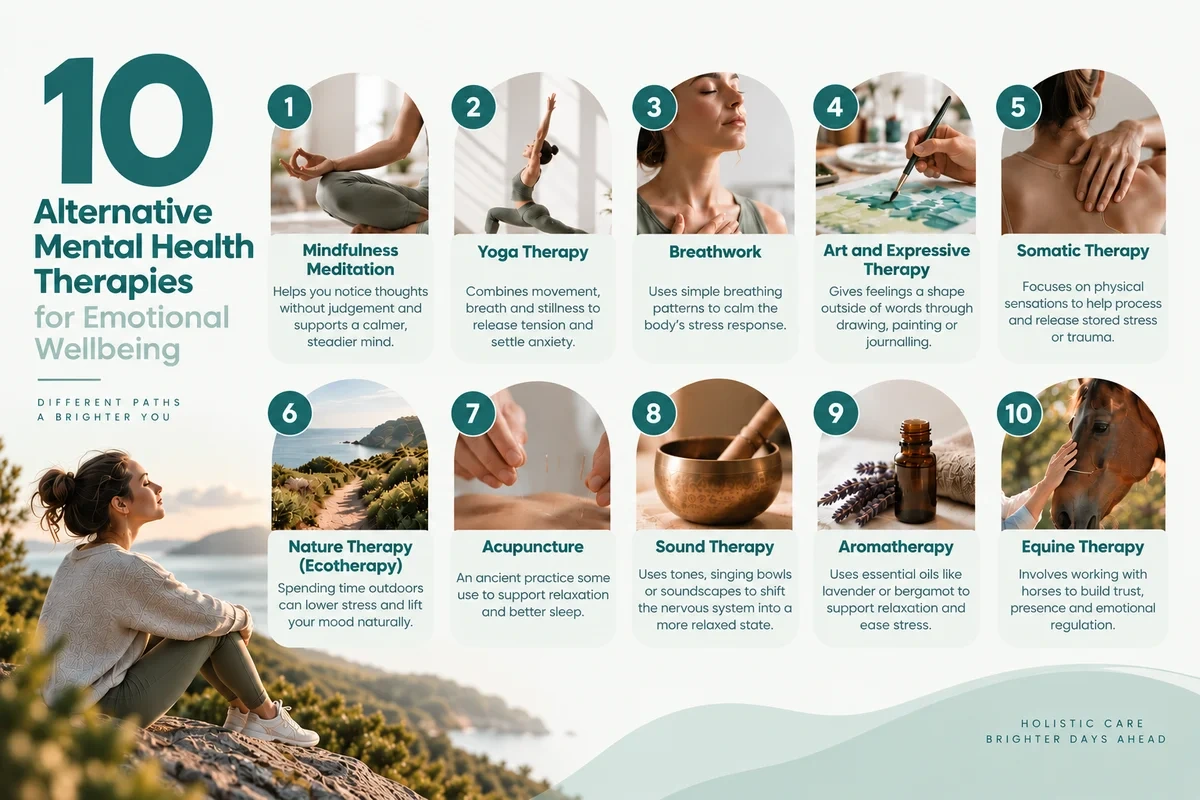
1. Mindfulness Meditation
Mindfulness meditation for emotional wellbeing helps you notice thoughts without judgement. Even ten quiet minutes a day can ease racing thoughts and support a calmer, steadier mind over time.
2. Yoga Therapy
Yoga therapy for mental health combines movement, breath and stillness. It’s a gentle, low-impact way to release tension and settle an anxious nervous system.
3. Breathwork
Breathwork for stress and anxiety uses simple breathing patterns to calm the body’s stress response. It’s quick, free and something you can practise almost anywhere.
4. Art and Expressive Therapy
Art therapy for mental health gives feelings a shape outside of words. Drawing, painting or journalling can be a gentle release valve for emotions that feel hard to name.
5. Somatic Therapy
Somatic therapy benefits people carrying stress or trauma in the body. It focuses on physical sensations to help process and release what talking alone sometimes can’t reach.
6. Nature Therapy (Ecotherapy)
The ecotherapy benefits of simply spending time outdoors are well documented. A walk in the bush or a sit by the water can lower stress and lift your mood naturally.
7. Acupuncture
Acupuncture for mental health is an ancient practice some people use to support relaxation and sleep. Always check with your GP before adding it to your routine.
8. Sound Therapy
Sound therapy for anxiety uses tones, singing bowls or guided soundscapes to shift the nervous system into a more relaxed state. Many find it deeply calming.
9. Aromatherapy
Aromatherapy for stress relief uses essential oils like lavender or bergamot to support relaxation. It’s a small, sensory ritual that can anchor a stressful day.
10. Equine Therapy
Equine therapy for anxiety involves working with horses to build trust, presence and emotional regulation. It’s especially popular for trauma-related anxiety and stress.
Are Alternative Therapies Effective for Mental Health?
Effectiveness varies from person to person. According to SANE Australia, research points to exercise easing symptoms of depression and anxiety, with yoga and meditation also helping many people manage stress. At the same time, SANE is clear that complementary therapies aren’t a replacement for proper medical treatment, so it’s worth checking with your doctor before starting one, especially alongside prescribed medication.
This is where a holistic mental health treatment approach shines: pairing evidence-based options with professional guidance rather than going it alone.
Holistic Approaches to Mental Health Without Medication
If you’re after natural mental health remedies, start small. Combine one or two therapies above with regular check-ins, whether that’s counselling, a trusted GP, or simply a conversation with someone who cares. Organisations like R U OK? remind us that a genuine conversation can be a powerful first step in supporting someone’s emotional wellbeing.
For a deeper dive into the evidence behind these approaches, resources such as EBSCO’s research overview on complementary and alternative mental health and Bond University’s research into complementary therapies for wellbeing offer helpful further reading. Macquarie University’s Emotional Health Clinic also runs structured treatment programs worth knowing about.
Frequently Asked Questions
What is holistic mental health therapy? It’s an approach that treats emotional, physical and lifestyle factors together, rather than symptoms in isolation.
Can holistic therapy replace medication? No. It works best alongside professional care, not as a substitute for it.
What alternative therapies help with anxiety? Breathwork, mindfulness, yoga and sound therapy are commonly used alternative therapies for stress and anxiety.
Finding What Works for You
There’s no one-size-fits-all answer to emotional wellbeing. The best results usually come from combining a few of these approaches with proper guidance from a healthcare provider. At Balnce, our practitioners take an integrative view of your care, helping you explore options that suit your life and your health history.
If you’re curious about where to start, have a read through more articles on the Balnce blog, or book a consult with one of our practitioners for guidance tailored to you.