
Feeling exhausted by work, family and daily stress? You’re not alone – in 2020–21, almost 44% of Australian adults reported experiencing significant stressors, according to the Australian Bureau of Statistics (ABS).
Adaptogens are herbs, roots and mushrooms that have traditionally been used in Ayurvedic, Chinese and other systems of medicine. In these traditions, they are described as helping the body adapt during times of stress. Scientific research into these effects is still developing, and traditional use is not the same as proven clinical benefit.
In this article, we’ll explore what adaptogens are, how they are traditionally used, and the ways people incorporate them into their wellness routines.
What Are Adaptogens?
Adaptogens are generally described in herbal traditions as non-toxic plants believed to help the body adapt to stress. Some researchers have proposed that certain adaptogens may interact with the body’s stress-response systems, including the hypothalamic–pituitary–adrenal (HPA) axis, but this remains an area of ongoing scientific investigation rather than an established or confirmed mechanism (UCLA Health).
People often include adaptogens in teas, powders or capsules as part of their wellness routines, based on this traditional use.
Common Adaptogens and Their Traditional Uses
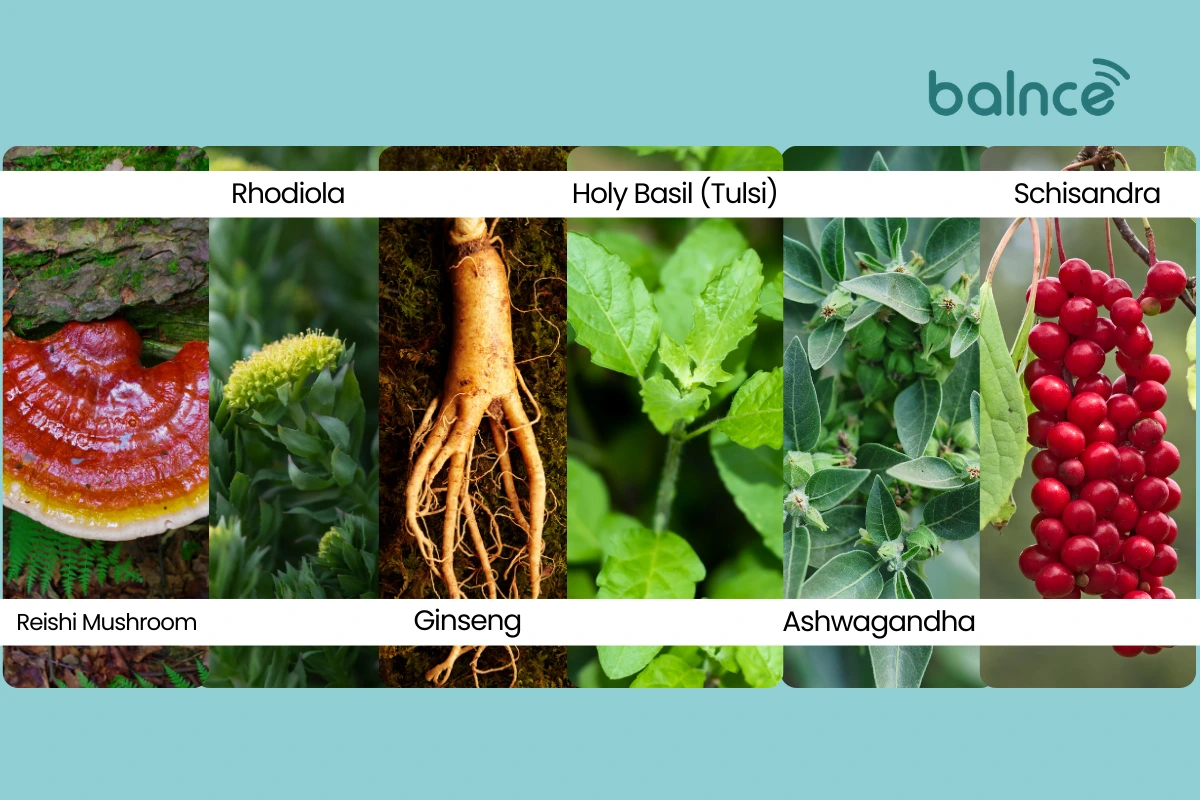
Across cultures, adaptogens have featured in herbal and traditional medicine systems for centuries. The uses below reflect traditional and historical use only. They are not scientifically confirmed health claims, and modern research into these effects is still limited and ongoing:
- Ashwagandha – A key herb in Ayurvedic medicine, traditionally used to support vitality and relaxation.
- Rhodiola – Traditionally used in parts of Europe and Asia, valued for supporting stamina and endurance during periods of exertion.
- Ginseng – Used in Chinese medicine as a tonic herb, traditionally associated with maintaining energy and balance.
- Holy Basil (Tulsi) – A plant considered sacred in Ayurvedic practice, traditionally associated with calmness and emotional balance.
- Schisandra – Used in traditional Chinese medicine, with schisandra berries traditionally associated with focus and concentration.
- Reishi Mushroom – Referred to in traditional Chinese practice by the historical nickname “mushroom of immortality.” This reflects its cultural and historical reputation, not a scientifically established effect on lifespan or longevity.
These herbs are not cures and are not scientifically proven to treat any condition. They may play a complementary role in a balanced lifestyle when combined with healthy habits such as good nutrition, sleep and regular movement. Traditional use claims are based on historical and cultural practice, not on clinical evidence, unless otherwise stated.
Adaptogens in Everyday Life
Many people choose to include adaptogens as part of their broader self-care and wellbeing practices, alongside, not instead of, habits that already prioritise rest, nourishment and balance.
Here are some of the ways adaptogens are commonly incorporated into daily routines, based on customary and cultural practice:
- Evening teas – Herbal teas made with adaptogens such as ashwagandha or holy basil are often enjoyed as part of a calming wind-down ritual before bed.
- Smoothie blends – Powders from roots and mushrooms like reishi or ginseng are sometimes added to smoothies or warm drinks.
- Wellness supplements – Some people choose capsules or formulas that combine several adaptogens as part of a broader wellness routine.
- Cooking and recipes – In some traditions, adaptogenic herbs like tulsi or schisandra are also included in cooking.
Adaptogens are not a standalone solution and should not replace medical care. They are best considered alongside a broader approach to wellbeing that includes:
- Consistent sleep habits – prioritising restorative rest.
- Balanced nutrition – nourishing the body with whole foods.
- Movement – incorporating regular physical activity.
- Relaxation practices – mindfulness, meditation, or simply making time for rest.
As with any supplement or herbal practice, seek advice from a qualified healthcare professional before making adaptogens a regular part of your routine, especially if you are pregnant, breastfeeding, taking prescription medicines, or managing an existing health condition.
A Balanced Approach to Wellness
Adaptogens have a long history of traditional use to support balance, energy and resilience. This reflects historical and cultural practice rather than confirmed clinical evidence, and research in this area is still developing. They are best viewed as one part of a holistic approach to wellbeing alongside healthy sleep, nutrition, movement and stress management practices, not as a substitute for medical care.
Everyone responds differently to herbs and supplements, so it’s important to seek guidance from a qualified health practitioner before adding anything new to your routine, particularly if you are pregnant, breastfeeding, taking prescription medicines, or have an existing health condition.
If you’d like to talk through how adaptogens might fit into your lifestyle, our team at Balnce can provide general holistic support tailored to your needs. This information does not replace individual medical advice from your doctor.
Disclaimer
This article is intended for general educational purposes only and does not constitute medical advice. It’s not intended to diagnose, treat, cure, or prevent any disease or medical condition. If you have concerns about your memory, thinking, sleep, alcohol use, or overall health, please consult your GP or another qualified healthcare professional for personalised advice.