
Have you ever gone to bed on time, only to wake up feeling exhausted and unrested? Sleep disruption can leave you groggy, irritable or unfocused the next day. Yet sleep is incredibly important; experts even rank it alongside diet and exercise as a “pillar of well-being”.
In this article, you’ll learn about common causes of sleep disruption (from stress and lifestyle factors to circadian imbalances), the signs and symptoms of insomnia or sleep deprivation, and simple, natural tweaks to your routine and environment that can help you get more restful nights.
Common Causes of Sleep Disruption
- Stress and anxiety: Worry and stress (about work, family or finances) can keep your mind racing at night. These mental health issues often disrupt your sleep routine.
- Poor habits and schedule: Irregular bedtimes, shift work or late-night screen time can break your natural sleep cycle. Drinking caffeine or alcohol in the evening also cuts into sleep quality.
- Diet, gut and medical factors: Heavy or spicy meals at night can cause discomfort or acid reflux, waking you up. Digestive issues and imbalances (like low iron in restless legs syndrome) affect sleep, as do medical problems like chronic pain or breathing issues.
For example, spending late hours on your phone delays the release of sleep hormones (melatonin). In fact, about 1 in 10 Australians has at least mild insomnia at any given time, so these factors affect many people.
Symptoms of Insomnia and Sleep Deprivation
- Difficulty falling asleep, waking often during the night, or waking up too early.
- Daytime fatigue, low energy or excessive sleepiness.
- Irritability, mood changes or anxiety.
- Trouble concentrating, memory problems or tension headaches.
In short, poor sleep quality can leave you feeling mentally foggy and exhausted the next day. This daytime tiredness then feeds back into more sleep trouble, creating a vicious cycle of stress and insomnia. Across Australia, sleep troubles are widespread: a large survey found that around 59% of adults reported experiencing a sleep problem at least once a week.
Resetting Your Circadian Rhythm Naturally
Consistent schedule: Go to bed and wake up at the same time every day (yes, even on weekends).
Morning light: Spend a few minutes in daylight soon after waking. Natural light helps reset your internal clock.
Limit evening light: Dim the lights and turn off devices an hour before bed to boost melatonin production.
Gradual shifts: If your schedule is off (due to travel or shift work), shift your bedtime by about 15 minutes earlier or later each day until you adjust.
Regular cues: Having meals, exercise and routines at the same times each day also reinforces your clock.
Sticking to these habits will help align your body clock naturally. Over time, a steady rhythm makes it easier to fall asleep and wake up feeling rested.
Sleep Hygiene Tips for Better Sleep
Bedroom environment: Keep your sleeping space cool, quiet and very dark (use blackout curtains or eye masks).
Calming routine: Spend 30–60 min winding down without screens. Try reading, gentle stretches or a warm bath to signal it’s almost bedtime.
Avoid stimulants: Cut caffeine and nicotine after late afternoon; avoid heavy meals and alcohol close to bedtime.
Bed for sleep: Use your bed only for sleeping or intimacy. Avoid working, eating or screen time in bed, so your body associates it with rest.
These simple sleep hygiene tips can improve your sleep quality over time. Consistency is key: a calm bedroom and routine help your body switch into sleep mode each night.
Natural Ways to Support Restful Sleep
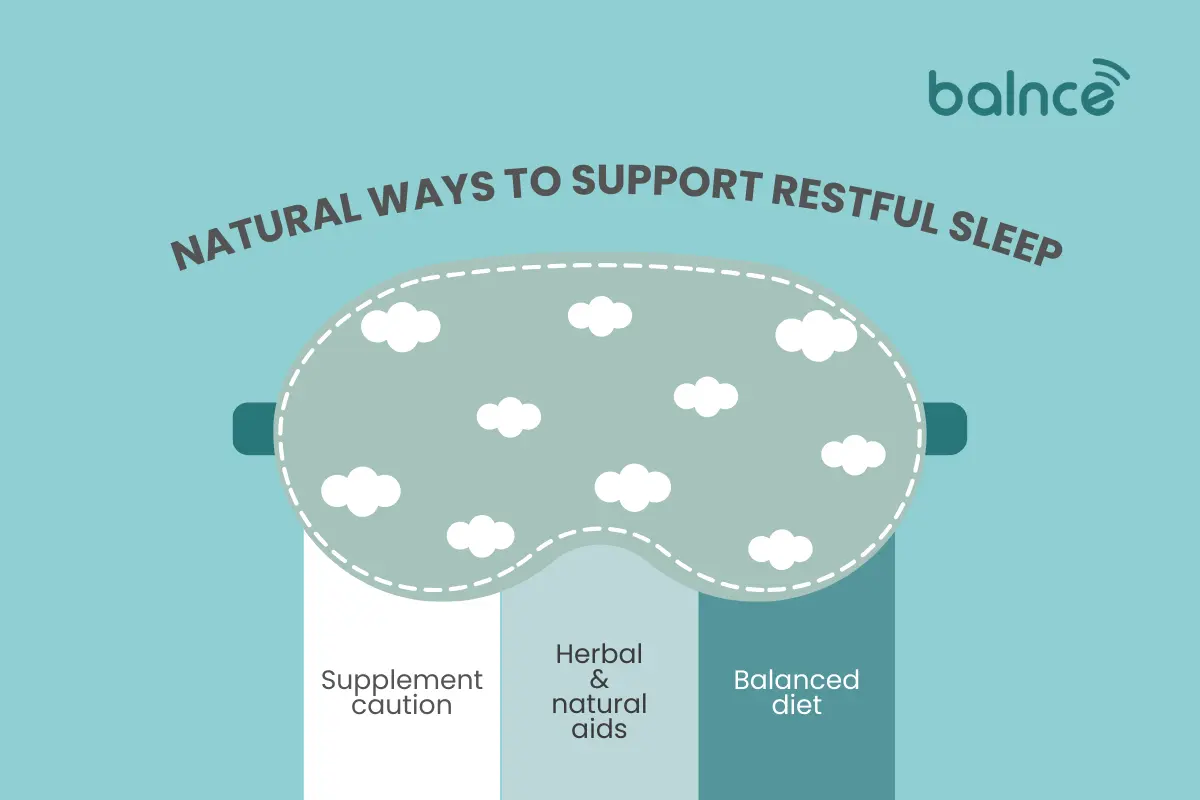
Herbal & natural aids: Some people find chamomile or lavender tea, or warm milk, relaxing as part of a wind-down routine before bed.
Supplement caution: Some people use magnesium as part of a bedtime routine, though evidence varies and individual needs differ. Melatonin is a regulated medicine in Australia and isn’t suitable for everyone. If sleep difficulties persist, speak with your doctor or pharmacist about whether a sleep aid such as melatonin could be appropriate for you.
Balanced diet: Eat regular meals and avoid heavy or spicy foods at night. Some foods rich in tryptophan (like turkey or nuts) are traditionally associated with relaxation.
Relaxation Techniques to Improve Sleep
- Deep breathing & meditation: Simple breathing exercises or mindfulness meditation before bed can lower stress hormones.
- Progressive muscle relaxation: Tense and then relax each muscle group in bed to ease body tension.
- Bedtime routine: Journaling worries or reading a light book (not on-screen) can calm your mind so you’re less restless at night.
- Gentle movement: Light evening stretches or yoga can also soothe the nervous system.
Overcome Sleep Disruption and Improve Your Sleep Naturally
Finding consistent, good sleep can transform your daily life. By identifying your specific causes of sleep disruption, whether stress, lifestyle habits or health issues, you can take steps to fix them. Simple changes (like the sleep hygiene and relaxation tips above) often make a big difference.
If you still struggle, consider talking to a doctor: an online consult through Balnce can pinpoint issues and suggest solutions. Our friendly doctors can also guide you on safe, natural sleep support. Restful nights are possible again. Book a consultation to get started.
Disclaimer
This article is intended for general educational purposes only and does not constitute medical advice. It’s not intended to diagnose, treat, cure, or prevent any disease or medical condition. If you have concerns about your memory, thinking, sleep, alcohol use, or overall health, please consult your GP or another qualified healthcare professional for personalised advice.